
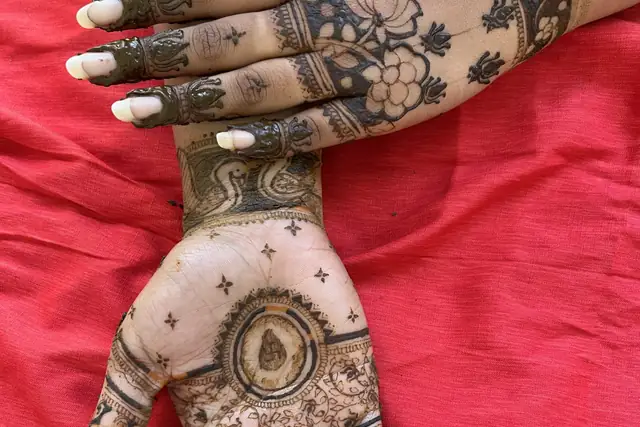
A Moroccan henna ceremony is a festive evening held a few days before the wedding, in which the bride, dressed by a neggafa in a richly embroidered gown, enters with the groom to darbouka and ululations, receives henna in her palm from an elder of the family, often with a coin, and celebrates with outfit changes, the carrying of the couple, mint tea and a table of Moroccan pastries. This guide explains each tradition of the Moroccan Jewish henna, the outfits, the music, the food, how to prepare the henna paste, and how to plan it today.
The Moroccan henna is the most widespread form of henna in Israel and among French Jewish families, and many couples of other origins borrow its codes. For the general planning method, see our complete guide to planning a henna night.
A tradition from Moroccan Jewish communities
Moroccan Jews from Fez, Meknes, Marrakech, Casablanca, Tangier, Tetouan, Essaouira, Rabat and the Atlas villages each had their own customs for weddings. The henna was part of a series of celebrations over several days before the wedding, with the ritual bath, the presentation of the trousseau and the henna evening itself. After emigration to Israel, France and Canada, families kept the henna alive and adapted it, and today it is one of the most joyful moments of a Moroccan Jewish wedding.
Customs vary from one city and one family to another, so the best guides are your grandparents. Ask them which songs were sung, which dress was worn, who applied the henna and what was placed in it.
The role of the neggafa
The neggafa is the traditional bridal dresser. In Morocco, she was a respected figure who owned the outfits and jewellery, dressed the bride, guided her through the rituals and sometimes sang. Today, in Israel and France, neggafa services offer:
- rental of outfits for the bride, the groom and sometimes the family;
- jewellery and headpieces;
- dressing and outfit changes during the evening, with assistants;
- the carrying of the couple on the amaria, a decorated platform or chair;
- sometimes the decorated throne and the henna tray.
Book your neggafa four to six months in advance, and visit to try on outfits.
Traditional outfits
The bride
- The grand dress ("keswa el kbira"): heavy velvet, often burgundy, green or blue, embroidered with gold thread, with a skirt, a bodice, a plastron, wide sleeves, a gold belt and a headpiece. It is the emblematic outfit of the Moroccan Jewish bride, traditionally worn for the henna.
- The caftan: one-piece robe in silk, brocade or velvet, closed with small buttons.
- The takchita: two-layer outfit, held at the waist with a belt.
- Jewellery: gold necklaces, a forehead piece, earrings, bracelets.
Brides typically wear two to four outfits during the evening. Our guide on henna outfits covers looks and rental in detail.
The groom
A djellaba or gandoura, often in white, cream or a colour matching the bride, with a fez (tarbouche) and babouches. Some grooms wear a burnous for the entrance.
The guests
Women often wear caftans or elegant dresses in rich colours, men a djellaba or a smart outfit. Many hosts provide accessories at the entrance.
The henna ritual step by step
- Procession of the henna tray: the henna is carried in on a decorated tray with candles, flowers and sometimes sugar or eggs, accompanied by songs and ululations.
- The couple on the throne: the bride and groom sit on the decorated seats.
- The application: an elder, usually the grandmother or the mother, places a small ball of henna in the palm of the bride, then the groom. A coin or a piece of gold is often pressed into it, as a wish for prosperity.
- Wrapping: the hand is closed and wrapped with a cloth, a ribbon or a small glove.
- Blessings: the elders bless the couple, sometimes in Judeo-Arabic, Hebrew or French.
- Henna for guests: unmarried girls and guests receive a little henna for luck, often on a leaf or a square of paper.
The detailed flow of the evening is explained in our guide on henna ceremony flow and rituals.
Preparing the henna paste
Many families like to prepare the ritual henna themselves, or ask a grandmother to do it. A simple, traditional method:
- Natural henna powder of good quality, finely sifted.
- Warm liquid: water, black tea or mint tea; some families add orange blossom water or rose water for the scent.
- A few drops of lemon juice in some recipes.
- Mix into a smooth paste, like thick yogurt, cover and let it rest a few hours so the dye releases.
Always use natural henna, never "black henna", and do a small skin test on the bride and groom a few days before. If you want detailed designs as well, a professional artist can prepare the paste; see our tips on choosing a henna artist.
Music, singing and dancing
The Moroccan henna has a recognisable soundtrack:
- Darbouka, tambourines and bendir for the processions;
- Andalusian music and chaabi rhythms;
- Judeo-Moroccan songs passed down in families, often sung by the women;
- Ululations, the "youyous", at every entrance;
- Mizrahi and Israeli hits for dancing, played by a DJ.
The carrying of the couple on the amaria is a highlight: carriers lift the bride and groom and dance with them around the room. Plan it after an outfit change to relaunch the evening. Our henna music and entertainment guide gives more ideas.
Food and hospitality
Moroccan hospitality is at the heart of the henna.
On arrival
- Rose water or orange blossom water sprinkled on guests' hands
- Dates, dried fruit and almonds
- Mint tea poured from high into decorated glasses
The meal
- Moroccan salads: matbucha, carrots with cumin, roasted peppers, eggplant
- Cigars and pastels
- Couscous with vegetables or meat
- Tagines with chicken, olives and preserved lemon, or lamb with prunes
- Fish with peppers and coriander, in some families
- Fresh bread
The sweets table
- Almond pastries and marzipan
- Gazelle horns (kaab el ghzal)
- Ghriba and fekkas
- Nougat and sugared almonds
- Mahia, the traditional fig spirit, for adults, in many Moroccan Jewish families
If the wedding is kosher, keep the henna kosher too so all the family can eat.
Decoration
The Moroccan henna decor is rich and warm: brass and coloured glass lanterns, embroidered cushions, Berber rugs, low carved tables, a high-backed throne for the couple and brass trays of sweets. Our article on henna decoration ideas and themes describes a complete traditional Moroccan theme.
Planning a Moroccan henna today
| When | To do |
|---|---|
| 6 months before | Format, budget, guest list; talk to the elders about the family customs |
| 5 months | Book venue, caterer, musicians and DJ |
| 4 to 6 months | Book the neggafa, try on outfits |
| 3 months | Photographer, decoration, henna tray and paste plan |
| 6 to 8 weeks | Send invitations with dress code |
| 2 weeks | Final timeline with the neggafa, DJ and musicians |
| The day | One coordinator; the couple enjoys |
Indicative budget: a family henna at home can stay at a few thousand euros, while a henna for 150 to 200 guests in a hall with neggafa, musicians, carrying and full catering is closer to a small wedding budget. The neggafa package often ranges from a few hundred to a few thousand euros depending on the number of outfits and services.
Keep it organised
The Moroccan henna involves many people: two families, the neggafa, musicians, DJ, caterer, photographer and the elders who carry the traditions. With Mazaly, a free app on iPhone and on the web, you can manage the guest list and replies, send online invitations with the dress code, track the budget and share the evening's timeline with everyone involved.
Conclusion
A Moroccan henna is a night of colour, music, blessings and generosity. Book the neggafa early, ask your grandparents about your family's customs, prepare natural henna for the ritual, plan the outfit changes and the carrying in the timeline, and welcome your guests with mint tea and pastries. Done this way, it becomes a celebration of your roots as much as of your love.
Frequently asked questions
What happens at a Moroccan henna ceremony?
The couple enters in traditional outfits to music and ululations, the henna is carried in on a decorated tray, and an elder places it in their palms, often with a coin, before wrapping the hand. The evening continues with blessings, outfit changes, the carrying of the couple, a meal, dancing and a table of Moroccan pastries.
What is a neggafa?
A neggafa is a traditional Moroccan bridal dresser. She provides and fits the bride's outfits and jewellery, manages outfit changes during the evening and often organises the carrying of the couple. Many neggafa services in Israel and France also dress the groom and family.
What does a Moroccan bride wear at the henna?
Traditionally, a heavy embroidered velvet dress known as the grand dress, or keswa el kbira, with gold jewellery and a headpiece. Brides then often change into a caftan or a takchita. Two to four outfits during the evening is common.
How do you prepare Moroccan henna paste?
Mix good quality natural henna powder with warm water, tea or mint tea, sometimes with orange blossom or rose water and a few drops of lemon, into a smooth paste. Let it rest a few hours before use. Always use natural henna and do a skin test beforehand.
What food is served at a Moroccan henna?
Guests are welcomed with mint tea, dates and sweets, then served Moroccan salads, cigars, couscous, tagines and sometimes fish. The evening ends with a sweets table of almond pastries, gazelle horns, ghriba, nougat and, for adults, mahia.