
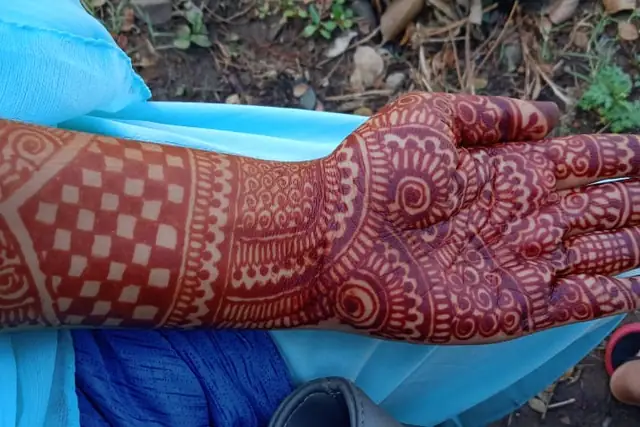
A typical henna ceremony follows a clear order: guests arrive and are welcomed with sweets and drinks, the bride and groom make a first entrance in traditional outfits with music and ululations, the henna is carried in on a decorated tray, an elder applies it to the couple's palms with blessings, then the evening alternates outfit changes, dancing, the meal and a final procession. This guide walks you through each ritual in order, explains its meaning, gives a sample timeline and shows how to keep the evening flowing.
The flow below is inspired mainly by Moroccan and North African Jewish hennas, the most common in Israel and France, with notes for other traditions. For budget, venue and vendors, see our complete guide to planning a henna night.
Overview: the henna in seven moments
| Moment | Duration | Purpose |
|---|---|---|
| 1. Welcome | 30 to 45 min | Guests arrive, sweets and drinks, music |
| 2. First entrance | 15 to 20 min | Couple's procession in traditional outfits |
| 3. Henna ritual | 20 to 30 min | Tray procession, application, blessings |
| 4. Meal | 45 to 60 min | Food, toasts, family moments |
| 5. Outfit change and second entrance | 20 to 40 min | New costumes, carrying of the couple |
| 6. Dancing | 60 min and more | Music for all generations |
| 7. Closing | 15 to 20 min | Sweets table, tea, goodbyes |
A full henna lasts about four to five hours.
1. Arrival and welcome
Guests arrive to music, often a traditional ensemble or a DJ playing Andalusian, Moroccan or Mizrahi tunes. In many families they are welcomed with:
- Rose water or orange blossom water sprinkled on their hands;
- Dates, dried fruit and sweets offered on brass trays;
- Mint tea and soft drinks.
Hosts often offer costumes or accessories, such as a scarf, a fez or a caftan, to guests who want to join the atmosphere. A photo corner is useful at this stage. The couple is usually not present yet; they are dressing with the help of the dresser.
2. The first entrance of the couple
This is the first highlight. The music builds, the lights dim, and the bride and groom enter in traditional outfits, often preceded by:
- musicians with darbouka and tambourines;
- women of the family carrying candles or trays;
- ululations, the joyful "youyous", from the guests;
- in some families, the bride is carried on a decorated chair or platform.
The couple walks to a decorated seating area, a kind of throne with cushions, from which they will watch the next rituals. In Yemenite families, the entrance of the bride in her elaborate costume, assembled piece by piece, is a moment of great emotion.
Tip: rehearse the path with the DJ, dresser and photographer. Decide who walks in front of the couple and who carries what.
3. The henna ritual
The procession of the henna tray
The henna paste is carried in on a decorated tray, often with candles, flowers, sugar, eggs or other symbolic items, depending on the family. The procession is accompanied by traditional songs. The person carrying it, often the mother or grandmother, may dance with the tray before placing it in front of the couple.
The application
An elder of the family, traditionally a grandmother, the mother of the bride or the mother of the groom, places a small ball of henna in the palm of the bride, then the groom. In many Moroccan families:
- a coin or a piece of gold is pressed into the henna, symbolising prosperity;
- the hand is closed and wrapped with a cloth, ribbon or glove;
- blessings are said in Hebrew, Judeo-Arabic or French.
Then other relatives may receive a little henna. Unmarried girls are often given some as a wish that they will marry soon, and guests receive a small amount on a leaf or a square of paper to take home for luck.
Blessings
This is a moment for the elders to bless the couple: a few words from the grandparents, sometimes the priestly blessing, sometimes a song. Keep the microphone ready, and ask the DJ to lower the music.
Tip: if you have hired a henna artist for detailed designs, schedule them after the ritual or during the meal, in a corner where guests can come one by one. Our guide on choosing a henna artist explains how to organise it.
4. The meal
After the ritual, guests sit down for the meal. In Moroccan families, it often includes salads, couscous, tagines, grilled meats or fish, and a generous sweets table later in the evening. It is a good time for:
- toasts by parents, siblings or friends;
- a short video of the couple's story;
- table photos.
Tip: serve the meal while the couple changes outfits, so their absence is not noticed.
5. Outfit changes and the second entrance
Many brides change two or three times: for example, a Moroccan caftan, then a takchita, then a modern dress. Each change can take 20 to 30 minutes, with the dresser. The groom may also change. A second entrance, sometimes with the carrying of the couple on chairs or a platform (the "amaria" in some Moroccan families), relaunches the evening.
Tip: build the outfit changes into the timeline and share it with the dresser and the DJ, so the music is ready when the couple comes back. For outfit ideas, read our guide on henna outfits and what to wear.
6. Dancing
After the second entrance, the dance floor opens. A good henna playlist alternates:
- traditional Moroccan, Yemenite or Middle Eastern music;
- Mizrahi and Israeli hits;
- French and international dance music;
- group dances that bring all generations together.
Some families invite a belly dancer or a traditional dance troupe. Our henna music and entertainment guide gives ideas.
7. Closing the evening
The henna often ends around a sweets table with almond pastries, gazelle horns, nougat, sugared almonds and mint tea. The couple thanks the guests. In some families, the henna on the bride's hands is left overnight to deepen the colour, and removed the next morning.
Guests may leave with a favour: a small box of sweets, a pouch of henna, a mini hamsa or a bottle of orange blossom water.
Sample timeline
| Time | Moment |
|---|---|
| 19:30 | Guests arrive, rose water, dates, mint tea, music |
| 20:15 | First entrance of the couple with musicians and ululations |
| 20:35 | Procession of the henna tray |
| 20:45 | Application by the grandmothers, blessings, henna for guests |
| 21:15 | Meal, toasts, couple's video |
| 21:45 | Outfit change |
| 22:15 | Second entrance, carrying of the couple |
| 22:30 | Dancing |
| 23:30 | Sweets table and tea |
| 00:00 | End of the evening |
Variations by tradition
- Yemenite henna: more emphasis on the bridal costume and women's songs; the evening may be calmer and more ceremonial.
- Tunisian and Libyan henna: different songs, dishes and outfits; in some families, separate evenings for the bride and groom.
- Mixed families: alternate rituals, for example a Moroccan tray procession and Yemenite songs, or two entrances, each in one family's traditional outfit.
Keep the flow seamless
A henna has many moving parts: the dresser, the musicians, the DJ, the caterer, the photographer, the elders who need to be in the right place at the right time. A few habits help:
- Write a detailed timeline and share it with all vendors and two or three relatives.
- Appoint a coordinator who is not the bride's mother.
- Brief the elders on when they will be called.
- Prepare the tray and all ritual items in advance.
With Mazaly, a free app on iPhone and on the web, you can build the timeline of the evening, share it with the family and vendors, and manage the guest list and online invitations in the same place. Keep the wedding plan in view too, with our guide on how to plan your wedding step by step.
Conclusion
A henna ceremony flows best when the rituals are clear: welcome, first entrance, henna tray and blessings, meal, outfit changes, dancing and sweets. Adapt the order to your family's tradition, give the elders their moment, plan the outfit changes in the timeline, and let the music carry the evening.
Frequently asked questions
What is the order of a henna ceremony?
A typical order is: guests' welcome with sweets and music, the couple's first entrance in traditional outfits, the procession of the henna tray, the application of henna with blessings, the meal, outfit changes and a second entrance, dancing, and a final sweets table with tea.
Who applies the henna at a henna ceremony?
In most Jewish families, an elder applies the henna, usually a grandmother, the mother of the bride or the mother of the groom. She places a small amount in the couple's palms, sometimes with a coin, and wraps the hand. A professional henna artist may also draw designs later in the evening.
How long does a henna ceremony last?
A full henna usually lasts four to five hours, from the welcome to the sweets table. The henna ritual itself takes about 20 to 30 minutes. Outfit changes, each around 20 to 30 minutes, add to the length of the evening.
Why is a coin placed in the henna?
In many Moroccan and North African families, a coin or a piece of gold is pressed into the henna in the bride's palm as a wish for prosperity and a good life. The symbol varies between families, and some use other items.
What happens after the henna is applied?
The hand is usually wrapped with a cloth or ribbon, and the henna is left for several hours, sometimes overnight, to deepen the colour. Meanwhile the celebration continues with the meal, music and dancing.