
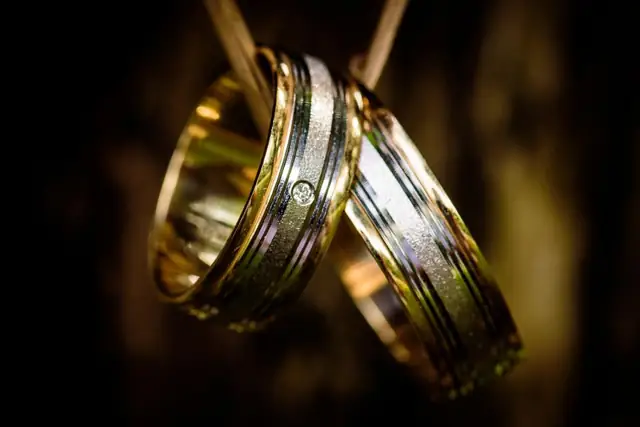
Engagement traditions around the world share one idea: two people, and usually two families, publicly commit to a future marriage. How they do it varies widely, from the Western diamond ring and the Jewish tenaim to Moroccan engagement evenings, Indian roka ceremonies and Japanese yuino gift exchanges. Here is a tour of the most meaningful customs, and how couples combine them today.
Why engagement customs matter
For most of history, an engagement was a family agreement as much as a romantic promise. Families met, negotiated, exchanged gifts and sealed the commitment in front of witnesses. Knowing where they come from helps couples from different backgrounds choose what to keep.
A note before the tour: customs vary greatly within each culture, between regions, religious practice and individual families. What follows describes common practices, not rules.
Western traditions
The engagement ring
The custom of giving a ring at betrothal goes back to Roman times, but the diamond solitaire became the norm only in the 20th century, largely thanks to advertising. In the English-speaking world, the ring is worn on the fourth finger of the left hand, linked to the old belief in a "vein of love" leading to the heart.
Asking for the parents' blessing
Asking the partner's father, or both parents, for permission or a blessing survives in many families. Today it is more often a gesture of respect than a request.
Kneeling and the surprise proposal
The proposal on one knee, often as a surprise, is a strong Western tradition, now popular worldwide. Our guide on how to plan a surprise proposal covers the modern version.
Northern European ring customs
In Germany and the Netherlands, couples traditionally wear plain engagement bands on one hand and move them to the other hand at the wedding. In Sweden, some brides receive a third ring when they become mothers. In Ireland, the Claddagh ring is worn with the heart facing outward when single and inward when committed.
Jewish engagement traditions
Tenaim
In traditional Ashkenazi practice, the tenaim ("conditions") is a document setting out the agreement to marry. It was historically signed at the engagement; today many communities sign it on the wedding day, just before the ketubah. After the reading, the two mothers break a plate together, a reminder that a broken engagement cannot be fully repaired and of the destruction of the Temple.
The vort and l'chaim
In many Orthodox communities, a small gathering called a vort or l'chaim celebrates the engagement soon after the couple decides to marry. Friends and family come to wish mazal tov, share drinks and cake, and sometimes hear a few words of Torah.
Israeli engagement parties
In Israel, an engagement party (mesibat erusin) can be anything from a family dinner to a large evening in an event garden with a DJ. Both families are often deeply involved, and guest lists can be long.
Sephardic, Moroccan and Tunisian customs
In many North African Jewish and Muslim families, the engagement is a significant family event. Common elements, which vary by city and family:
- The formal request: the groom's family visits the bride's family to ask for her hand, often bringing sweets, flowers or sugar cones as a symbol of a sweet life.
- Gifts for the bride: jewelry, fabrics, perfume or clothing presented by the groom's family, sometimes displayed on decorated trays.
- Music and ululation: the zaghrouta (ululation) by the women welcomes the news and the couple.
- The henna night: in some families, a henna ceremony follows later, closer to the wedding. Learn more in our guide to Moroccan henna ceremonies.
In Arab Muslim traditions, the engagement (khutba) is often followed by the katb al-kitab, the signing of the marriage contract, which may happen well before the wedding celebration.
South Asian traditions
India
Hindu families often hold a roka ceremony, in which both families formally accept the match, followed by a sagai or ring ceremony with prayers, gifts and a meal. In Sikh families, the kurmai or shagun involves the bride's family visiting the groom's family. Ceremonies can be large, with a priest, music and dozens or hundreds of guests.
Pakistan and Bangladesh
The mangni is a formal engagement where rings are exchanged in the presence of both families, often accompanied by gifts of clothing, sweets and jewelry.
East Asian customs
China
Traditional Chinese betrothal included the guo da li, in which the groom's family presents gifts to the bride's family, such as tea, cakes, fruit, wine and money in red envelopes. The bride's family returns some gifts as a sign of goodwill. An auspicious date for the wedding is often chosen with care.
Japan
In the yuino ceremony, the two families exchange symbolic gifts, each carrying a wish for the couple, such as long life or prosperity. Many modern couples replace it with a formal family dinner.
Korea
Traditionally, the groom's friends delivered a box of gifts, the ham, to the bride's family, sometimes with playful bargaining at the door. Modern versions are simpler or skipped.
Other customs worth knowing
- Philippines: in the pamanhikan, the groom and his family visit the bride's parents to ask for her hand and discuss the wedding over a meal.
- Brazil and Argentina: both partners often wear engagement bands on the right hand and move them to the left at the wedding.
- Kenya: among the Kikuyu, the ruracio brings families together for gift negotiations.
Comparing the traditions
| Culture | Key engagement custom | What it symbolizes |
|---|---|---|
| Western | Ring and proposal | Personal promise |
| Ashkenazi Jewish | Tenaim and plate breaking | Family agreement, seriousness of commitment |
| Orthodox Jewish | Vort or l'chaim | Community joy |
| Moroccan and Tunisian | Request visit, gifts, zaghrouta | Union of two families, sweetness |
| Hindu Indian | Roka and sagai | Families accept the match |
| Chinese | Guo da li gift exchange | Respect, prosperity |
| Japanese | Yuino | Wishes for the couple |
| Filipino | Pamanhikan | Respect for the bride's parents |
Combining traditions as a modern couple
Many couples today come from two cultures, or want to honor heritage without copying every ritual. Some approaches that work:
- Choose one meaningful ritual from each side. For example, a Western proposal followed by a Moroccan-style family evening with gifts and sweets.
- Explain the customs to guests. A short welcome speech or a card on the tables helps the other family understand what they are seeing.
- Involve grandparents. They often know details that parents have forgotten, and being asked means a lot to them.
- Keep the engagement party inclusive. Food, music and language that both families can enjoy. Our engagement party planning guide explains how to bring two families together.
- Think ahead to the wedding. Some rituals are better saved for the wedding or the henna night; others belong only at the engagement.
When two families with different customs plan together, it helps to keep the shared decisions, guest list and dates in one place that everyone can see. In Mazaly, you can invite parents and siblings to the same event so that everyone works from the same list.
Conclusion
From plates broken by two mothers to trays of jewelry, red envelopes and a ring on one knee, engagement traditions around the world all celebrate the same moment: two families becoming one. Learn the customs of both sides, choose the ones that speak to you, and explain them to your guests. The result is an engagement that feels personal, rooted and joyful. For the rest of the journey, our engagement to wedding planning timeline shows what comes next.
Frequently asked questions
What is the Jewish engagement tradition?
In traditional Ashkenazi practice, the couple's families sign the tenaim, a document of conditions for the marriage, and the two mothers break a plate together. Many communities now do this on the wedding day. Orthodox families often hold a vort or l'chaim, a gathering to celebrate the engagement.
Why do mothers break a plate at a Jewish engagement?
Breaking a plate after reading the tenaim symbolizes that a broken engagement, like a broken plate, can never be fully repaired. It also recalls the destruction of the Temple in Jerusalem, a theme that appears again when the groom breaks a glass under the chuppah.
What happens at a Moroccan engagement?
In many Moroccan families, the groom's family visits the bride's family to request her hand, bringing sweets and gifts. The engagement evening may include jewelry and fabrics for the bride, music, ululations and a festive meal. A henna ceremony often follows closer to the wedding. Customs vary by family and region.
On which hand is an engagement ring worn?
In most English-speaking and many European countries, the engagement ring is worn on the fourth finger of the left hand. In Germany, the Netherlands, Brazil and some other countries, engagement and wedding rings are worn on different hands, and the ring moves from one hand to the other at the wedding.
What is a roka ceremony?
A roka is a Hindu pre-engagement ceremony in which both families formally accept the match, often with prayers, gifts and sweets. It is usually followed by a sagai, the ring ceremony, which can be a large celebration with family and friends.