
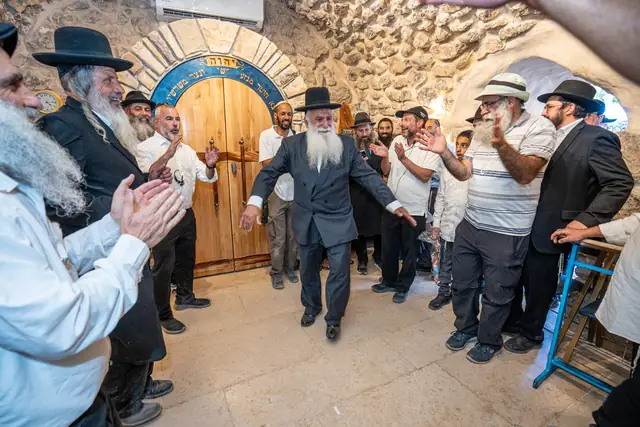
Bar mitzvah planning starts about 12 to 18 months before your son turns 13: you fix the date with your rabbi, book the venue, choose a tutor for the Torah reading, then build the guest list, budget and party around that core. This complete guide walks you through every step, from the synagogue ceremony to the last song of the night, with timelines, budget ranges and the mistakes families most often regret.
Whether you are planning a traditional Shabbat bar mitzvah in a community synagogue, a Monday-morning ceremony at the Western Wall, or a relaxed family lunch after a Thursday Torah reading, the same logic applies: the religious milestone comes first, and everything else is built to honour it.
What a bar mitzvah actually is
A Jewish boy becomes a bar mitzvah, literally "son of the commandment", at 13 according to the Hebrew calendar. From that day he is counted in a minyan, can be called to the Torah and is personally responsible for the commandments. Technically, nothing has to happen for this to be true: he becomes bar mitzvah automatically. The ceremony and the party are the way a family and a community mark the moment.
For girls, the bat mitzvah traditionally takes place at 12 in Orthodox communities and at 12 or 13 in Conservative and Reform settings. The celebration differs from one community to another, so we cover it in a dedicated bat mitzvah planning guide.
If you want the meaning behind each ritual, the tallit, the tefillin, the aliyah and the candy throwing, read our article on bar mitzvah traditions explained. This guide focuses on the practical side.
Step 1: Fix the Hebrew date and the type of ceremony
Everything starts with the date. Ask your rabbi or community office to calculate your son's Hebrew birthday and the Torah portion (parasha) linked to it. A boy born just after sunset is born on the following Hebrew day, so give the exact time of birth if you know it.
Then decide what kind of ceremony suits your family:
- Shabbat morning: the classic option in many Ashkenazi and diaspora communities. Your son reads the Torah portion, often the maftir and the haftarah, and may give a short speech. The party is usually Saturday night or Sunday.
- Monday or Thursday morning: very common in Sephardi and Israeli families, because the Torah is read on those days and the ceremony can be photographed and filmed. It is also the day boys often put on tefillin publicly for the first time.
- Rosh Chodesh or a festival: some families choose the new month or Chol Hamoed for a festive atmosphere.
- In Israel: the Western Wall (Kotel), Masada, a synagogue in Jerusalem's Old City or a small community in the north. Popular with families from France, the UK and the US who combine the ceremony with a family trip.
Custom varies widely: some communities expect the boy to read the whole parasha, others only the maftir, others simply the blessings of an aliyah. Ask your rabbi early what is expected, because it determines how many months of study your son needs.
Step 2: Build your bar mitzvah timeline
Here is a realistic retro-planning. Families in Israel often work on shorter timelines, while venues in Paris, London or New York can be booked two years ahead, so adapt it to your city.
| When | What to do |
|---|---|
| 18 to 12 months before | Confirm the Hebrew date with the rabbi, choose ceremony type, set the overall budget, start looking at venues |
| 12 months | Book the venue and caterer, find a tutor for the Torah reading, draft the guest list |
| 9 to 10 months | Book the DJ or band, photographer and videographer, decide on a theme if you want one |
| 6 months | Send save-the-dates to guests who travel, order the tallit and tefillin (tefillin from a trusted sofer can take time), plan accommodation |
| 3 months | Finalise the menu, plan decoration, write the order of the day, order the invitations |
| 6 to 8 weeks | Send invitations, start the speech drafts, book a haircut and suit fittings |
| 3 to 4 weeks | Chase RSVPs, build the seating plan, confirm every vendor in writing |
| 1 week | Final numbers to the caterer, dress rehearsal at the synagogue, print the timeline for the team |
| The day | Hand over the coordination to someone you trust and enjoy it |
In many communities a boy starts putting on tefillin around a month before the bar mitzvah so he is used to it on the day; in others he wears them for the first time at the ceremony. Ask your rabbi which custom your family follows.
Step 3: Prepare your son for the ceremony
The religious part is the heart of the day, and it is the part that cannot be rushed.
Finding a tutor
Most boys need between six months and a year of weekly lessons to learn the cantillation (ta'amim) and read confidently. A good bar mitzvah tutor teaches the reading, but also explains what the text means so your son can talk about it. Ask the synagogue for names, and ask other parents who went through it a year or two ago.
The d'var Torah or speech
Many boys give a short speech, a d'var Torah, about their parasha, followed by thanks to parents, grandparents and teachers. It does not need to be long: three to five minutes is plenty. Our article on how to write a bar mitzvah speech gives a structure and examples, and fathers will find their own section in the bar mitzvah father speech guide.
Tallit, tefillin and kippah
Order the tefillin early from a reputable source and have them checked. Choose a tallit with your son; some families buy it in Israel, others receive it as a gift from grandparents. Kippot printed with the name and date are a common favour for guests in synagogue.
Step 4: Choose the format of the celebration
Not every bar mitzvah needs a ballroom. Think about what your son enjoys, the size of the family and the budget, then choose a format.
- Kiddush or lunch after the service: simple, warm, often in the synagogue hall. Ideal for a family-focused celebration.
- Evening party: the full experience with DJ, dancing, candle-lighting ceremony and a big meal. Usually the biggest budget.
- Ceremony in Israel plus family dinner: the trip itself becomes the celebration.
- Two events: an adult dinner and a separate party for teenagers, which avoids forcing 13-year-olds and great-uncles onto the same dance floor.
- Activity-based party: escape room, karting, beach day or a sports venue for kids, with a smaller adult meal.
For venue options, from halls and hotels to rooftops and gardens, read our bar mitzvah venue ideas. If you want a common thread for the decoration and the invitations, browse our bar mitzvah theme ideas for 2026.
Step 5: Set and track the budget
A bar mitzvah budget depends far more on the guest count and the format than on the decoration. Here are indicative ranges for a party with a meal in a hall, based on what families typically report; prices vary a lot between Israel, France, the UK and the US.
| Item | Share of budget (indicative) | Notes |
|---|---|---|
| Venue and catering | 45 to 55 % | Usually priced per head; kosher supervision adds cost |
| Music and entertainment | 10 to 15 % | DJ, MC, dancers, photo booth |
| Photo and video | 8 to 12 % | Ceremony plus party coverage |
| Decoration and flowers | 5 to 10 % | Centrepieces, lighting, candle-lighting table |
| Invitations and stationery | 1 to 3 % | Lower if you go digital |
| Clothing | 3 to 5 % | Suit for the boy, outfits for the family |
| Religious items and tutor | 5 to 8 % | Tefillin, tallit, lessons |
| Contingency | 5 to 10 % | Always keep a reserve |
As an indicative order of magnitude, a simple kiddush for 60 people can stay under a few thousand euros, while an evening party for 200 guests in a major European city often reaches several tens of thousands. Our bar mitzvah budget planning guide explains how to build your own figure, where to save and which costs people forget.
The key habit is to log every quote and every deposit in one place. Note what is committed, paid and still due, and share it with your partner so nobody is surprised by a final invoice.
Step 6: Build the guest list
The guest list is where most tensions appear: your friends, your partner's family, the synagogue community, and the son's entire class. A few principles help:
- Start with your son's list. It is his day. Ask him who really matters, then decide whether you invite the whole class or a close group of friends.
- Decide on rules before naming people. Partners of cousins? Children of guests? Colleagues? Fix the rule and apply it to everyone.
- Count teenagers separately. They need their own table, often their own menu, and their own entertainment.
- Think about the synagogue. In many communities, the whole congregation is welcome at the kiddush after the service, even if the evening party is by invitation.
Keep the list in one shared file rather than three spreadsheets, so both parents and the grandparents add names in the same place and you see the reply status of every household. For tips on wording and timing, read our article on bar mitzvah invitation tips.
Step 7: Send invitations and follow the RSVPs
Send save-the-dates four to six months ahead if guests travel, then invitations six to eight weeks before the date. Include:
- your son's full name, and often his Hebrew name;
- the date, both civil and Hebrew if you wish, and the parasha;
- the address of the synagogue or the Kotel meeting point, with the exact time;
- the party details if they differ;
- an RSVP deadline and how to reply;
- dress code and any specific information, for example that the ceremony is on Shabbat, so no photos or phones.
Digital invitations have become the norm for many families, especially for Israeli and international guest lists. With an online invitation and its own event page, guests reply in one click and you avoid chasing answers by phone. Mazaly's online invitations are linked to the guest list, so each reply updates your numbers automatically, and reminders go out on WhatsApp in one tap for those who have not answered.
Step 8: Plan the party: music, entertainment and the candle-lighting
A good bar mitzvah party alternates moments for adults and moments for kids. Typical building blocks:
- Grand entrance of the bar mitzvah boy, often with a video montage.
- Hora and the traditional chair lift.
- Candle-lighting ceremony: 13 candles (sometimes 14, one for good luck), each lit by a relative or group of friends with a short dedication. Write the list in advance and keep each dedication short.
- Video of his childhood, three to four minutes maximum.
- Speeches: parents, grandparents, sometimes a sibling.
- Dance sets for teenagers, with an MC or dancers to bring them onto the floor.
- Activities: photo booth, gaming zone, caricaturist, hip-hop dance workshop.
Our bar mitzvah party entertainment ideas list options for every budget and age group.
Step 9: Photos, video and memories
The photographer you choose must understand the rules of the ceremony. On Shabbat, photography is not allowed in Orthodox synagogues, so many families organise a photo session before Shabbat, with the tallit and the Torah scroll if the synagogue agrees, or on the day of the tefillin ceremony. On a Monday or Thursday at the Kotel, the photographer can usually follow the ceremony.
Make a shot list with the photographer: the boy with each grandparent, siblings, the tefillin, the reading, the candle-lighting, the hora. Our bar mitzvah photography tips cover the full list and how to brief your team.
Step 10: Gifts and thank-you notes
Guests often give money, a cheque or a transfer, frequently in multiples of 18, the numerical value of the Hebrew word "chai" (life). Books, a first watch, a Jewish keepsake or a contribution to a charity are also common. Our list of bar mitzvah gift ideas helps guests who ask what to bring and helps parents if they want to suggest something.
Plan the thank-you notes from the start: keep a list of who gave what as gifts come in, and encourage your son to write the messages himself within a few weeks. It is part of the lesson of becoming responsible.
Step 11: The day itself, minute by minute
Write a detailed order of the day and share it with every vendor and with the two or three relatives who will help. Example for a Thursday ceremony and evening party:
| Time | Moment |
|---|---|
| 07:00 | Arrival at synagogue or the Kotel, photographer present |
| 07:30 | Shacharit prayer, tefillin ceremony |
| 08:15 | Torah reading, aliyah, father recites the blessing "Baruch shepetarani" |
| 08:45 | Candy throwing, singing, photos with family |
| 09:30 | Breakfast or kiddush for those present |
| 19:00 | Guests arrive at the venue, cocktail |
| 20:00 | Grand entrance, hora |
| 20:30 | First course, video montage |
| 21:15 | Candle-lighting ceremony, speeches |
| 21:45 | Main course, dance sets |
| 23:00 | Dessert, cake, final dances |
Print it, and also share it digitally so each helper can see the next step on their phone.
Mistakes families regret
- Booking the venue before confirming the Hebrew date with the rabbi.
- Underestimating study time: starting lessons three months before is stressful for the boy.
- Forgetting the teenagers: a party built only for adults loses the kids by 22:00.
- Speeches that are too long: three speeches of four minutes work; one of fifteen does not.
- No contingency budget, and deposits not tracked.
- Nobody in charge on the day: parents end up answering vendor questions instead of being with their son.
- Too many guest lists in too many places.
Organising everything with one tool
The difference between a stressful year and a calm one is usually organisation, not money. Mazaly is a free app, on iPhone and on the web, that brings the guest list, RSVPs, invitations, seating plan, budget, checklist, calendar and day-of timeline together, and lets both parents and the grandparents work on it at the same time. You can also find caterers, DJs and photographers in the vendor directory, or see all features.
Conclusion
A bar mitzvah is a milestone, not a production. Fix the Hebrew date and the type of ceremony first, give your son enough time to prepare, then build a party that looks like him. Start early, keep everything in one place, and delegate the day so you can live it. The rest, the theme, the decoration, the playlist, will follow.
Frequently asked questions
How far in advance should you start planning a bar mitzvah?
Most families start 12 to 18 months before the date. That leaves enough time to confirm the Hebrew date with the rabbi, book a popular venue and give the boy six months to a year of Torah reading lessons. In Israel, where Monday and Thursday ceremonies at the Kotel are common, some families plan in six to nine months.
At what age is a bar mitzvah and a bat mitzvah?
A boy becomes bar mitzvah at 13 according to his Hebrew birthday. A girl becomes bat mitzvah at 12 in Orthodox tradition, and many Conservative and Reform communities celebrate at 12 or 13. Your rabbi can calculate the exact Hebrew date from the date and time of birth.
How much does a bar mitzvah cost?
It depends mainly on the number of guests and the format. As an indicative range, a kiddush or family lunch can stay at a few thousand euros, while an evening party for 150 to 250 guests in a large city often costs several tens of thousands. Venue and catering usually represent about half of the total.
What happens at a bar mitzvah ceremony?
The boy is called to the Torah for an aliyah, often reads part of the weekly portion and the haftarah, and may give a short speech on his parasha. On weekdays he puts on tefillin, and his father traditionally recites the blessing "Baruch shepetarani". In many communities, guests throw soft candies at the end of his reading.
Do you have to have a party for a bar mitzvah?
No. The boy becomes bar mitzvah automatically at 13, and the celebration is a custom. Many families choose a simple kiddush, a family lunch or a trip to Israel instead of a large party. What matters is that the religious milestone is honoured in a way that feels right for your son.
What is the best app to plan a bar mitzvah?
Look for a tool that combines the guest list, RSVPs, invitations, budget and day-of timeline, and that both parents can use at the same time. Ideally it should also handle the seating plan and appointment reminders, and work on both phone and computer so the whole family can help.