
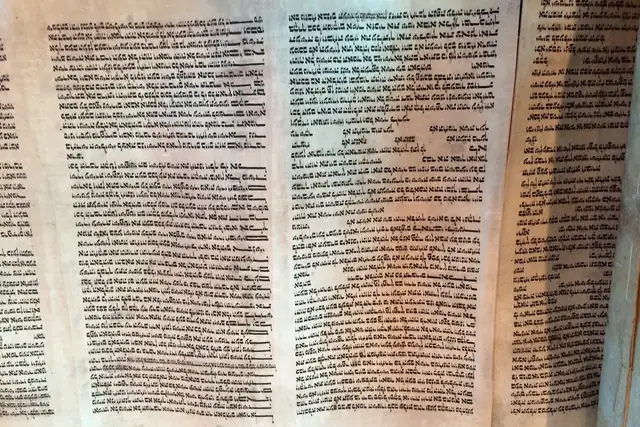
The main bar mitzvah traditions are the boy's first call to the Torah (the aliyah), the reading of his Torah portion and haftarah, the first wearing of tefillin and sometimes a tallit, the father's blessing, the candy thrown by guests, and a festive meal with music and dancing. Each ritual carries a specific meaning, and customs vary between Ashkenazi, Sephardi, Moroccan, Israeli and liberal communities. This guide explains them one by one, so you understand what happens and why.
Whether you are a parent preparing the ceremony, a guest attending your first bar mitzvah or a grandparent curious about how customs have changed, this is the "why" behind the day. For the practical "how", see our complete bar mitzvah planning guide.
What does "bar mitzvah" mean?
"Bar mitzvah" means "son of the commandment". In Jewish law, a boy becomes responsible for observing the commandments at 13, according to the Hebrew calendar. From that day he can be counted in a minyan, the quorum of ten required for public prayer, he can lead certain prayers and be called to the Torah.
An important point: a boy becomes bar mitzvah automatically on his 13th Hebrew birthday. The ceremony does not make him bar mitzvah; it celebrates it publicly. That is why the celebration can take very different forms without being "less valid".
For girls, the bat mitzvah traditionally occurs at 12. Its celebration has developed a lot over the last century, and we explain it in our bat mitzvah planning guide.
The aliyah: being called to the Torah
The central ritual is the aliyah, literally "going up". The boy is called by his Hebrew name, "Ya'amod Noam ben David", to come up to the bimah where the Torah scroll is read. He recites the blessing before the reading, the section is read, then he recites the blessing after.
Depending on the community and his preparation, he may:
- simply recite the blessings while the reader chants the text;
- read the maftir, the last section of the weekly portion;
- read a larger part, or the entire parasha;
- chant the haftarah, a passage from the Prophets linked to the week's portion, on Shabbat and festivals.
Reading the Torah means learning the cantillation (ta'amim), the musical notes that guide the chant, from a scroll with no vowels and no punctuation. This is why boys study for months.
Tefillin: the first daily commandment
Tefillin are two small black leather boxes containing parchments with verses from the Torah, bound with leather straps on the arm and the head during weekday morning prayers. They express the idea of dedicating one's actions (the arm, near the heart) and thoughts (the head) to God.
Customs differ:
- In many Ashkenazi families, the boy starts putting on tefillin about one month before his bar mitzvah, to get used to it.
- In many Sephardi and Moroccan families, the first wearing of tefillin is a celebration in itself, often on a Monday or Thursday morning, with singing, ululations and a festive breakfast.
- Some families hold the tefillin ceremony at the Western Wall.
Because tefillin are not worn on Shabbat and festivals, a boy whose bar mitzvah is on Shabbat often puts them on publicly during a weekday service.
Tefillin must be written by a qualified scribe (sofer) and checked regularly. Buy them from a reputable source and ask your rabbi.
The tallit
The tallit is the prayer shawl with fringes (tzitzit) at its four corners. Here too, customs vary: in many Sephardi and German Jewish communities a boy wears a tallit from his bar mitzvah, while in many Ashkenazi communities unmarried men do not wear a tallit for prayer, except sometimes when leading it or reading the Torah. A tallit is a popular gift from grandparents, sometimes bought in Israel.
"Baruch shepetarani": the father's blessing
After his son's aliyah, the father traditionally recites a short blessing, "Baruch shepetarani", thanking God for relieving him of responsibility for his son's actions. It sounds surprising, but it expresses a powerful idea: from today, the boy is responsible for himself. Many fathers find this moment extremely emotional.
The d'var Torah
In many communities the boy gives a short speech, a d'var Torah, explaining a lesson from his parasha. It shows that he has understood the text, not only learned to chant it. It is often followed by thanks to his family and teachers. Our guide on how to write a bar mitzvah speech includes examples.
The candy throwing
When the boy finishes his reading, guests, especially in Ashkenazi and many diaspora communities, throw soft candies towards the bimah, wishing him a sweet life. Children then rush to collect them. Many synagogues ask for soft, wrapped sweets only, sometimes distributed in small bags at the entrance. In Sephardi communities, ululations (the "youyou") and songs often accompany the moment.
The seudat mitzvah and the party
A meal celebrating a mitzvah, a seudat mitzvah, follows the ceremony. It can be a kiddush in the synagogue, a family lunch or a full evening party.
Party traditions include:
- The hora and lifting the boy, sometimes his parents, on a chair;
- The candle-lighting ceremony, a more recent custom, especially in North America and in many communities in Europe: 13 candles lit by relatives and friends, each with a short dedication;
- A video of the boy's childhood;
- Speeches by parents and grandparents;
- Dancing, with Israeli and Mizrahi music, and plenty of time for the teenagers.
Sephardi and Moroccan customs
Moroccan and other North African families have rich bar mitzvah traditions:
- The tefillin ceremony on a Monday or Thursday is often as important as the Shabbat.
- In some Moroccan families, a henna is held a few days before the bar mitzvah, with traditional outfits, songs and a symbolic dab of henna.
- Piyutim, liturgical songs, are sung during the service and the celebration.
- Guests are welcomed with mint tea, almond pastries and sweets.
Customs vary from one family and one city of origin to another: Fez, Meknes, Casablanca or Tangier did not celebrate in exactly the same way. Ask the grandparents: they are often the best source.
Israeli traditions
In Israel, many families hold the ceremony at the Western Wall on a Monday or Thursday, sometimes with drums and a procession, followed by a breakfast and later a party in an event hall. Others choose Masada at sunrise, a synagogue in Jerusalem's Old City, or a trip with the family to historical sites. Schools often hold bar and bat mitzvah programs around a "roots" project, where children research their family history.
Liberal and modern adaptations
In Reform, Liberal and Conservative communities, you will find:
- Egalitarian ceremonies where girls and boys read the Torah in the same way;
- Mitzvah projects: a volunteering or charity project the young person chooses and presents;
- Family participation, with parents and grandparents receiving aliyot;
- Bar mitzvahs for adults who did not have one at 13.
Traditions at a glance
| Tradition | Meaning | Where it happens |
|---|---|---|
| Aliyah | First call to the Torah as an adult | Synagogue or Western Wall |
| Torah and haftarah reading | Mastery and connection to the text | Synagogue |
| Tefillin | Dedication of action and thought | Weekday morning prayer |
| Tallit | Commandment of tzitzit | Varies by community |
| Baruch shepetarani | Transfer of responsibility | After the aliyah |
| D'var Torah | Understanding of the text | Synagogue or party |
| Candy throwing | Wish for a sweet life | Synagogue |
| Seudat mitzvah | Meal celebrating a commandment | Kiddush, lunch, party |
| Hora and chair | Communal joy | Party |
| Candle-lighting | Honouring family and friends | Party |
Conclusion
Every bar mitzvah tradition says the same thing in a different way: a boy is joining the chain of the Jewish people as a responsible adult. Understanding the meaning of the aliyah, the tefillin, the blessing and the candies makes the day richer for the family and for guests. Keep the customs that matter to your family, ask the elders about the ones from your city of origin, and build the party around them. When you are ready to plan, our bar mitzvah party entertainment ideas will help you shape the celebration, and Mazaly, a free app on iPhone and on the web, keeps the guest list, invitations and timeline of the day in one place.
Frequently asked questions
What happens at a bar mitzvah ceremony?
The boy is called to the Torah for an aliyah, recites the blessings and often reads part of the weekly portion and the haftarah. He may give a short speech, his father recites a blessing, and guests often throw soft candies. The ceremony is followed by a festive meal.
Why do people throw candy at a bar mitzvah?
Guests throw soft, wrapped candies at the boy after his Torah reading to wish him a sweet life as he enters adulthood. Children then collect the sweets. Many synagogues ask guests to use only soft candies, sometimes provided at the entrance.
When does a boy start wearing tefillin?
A boy is obligated from his bar mitzvah at 13. In many Ashkenazi communities he starts about a month before so he is used to it, while many Sephardi families celebrate the first wearing of tefillin as a ceremony, often on a Monday or Thursday at the synagogue or the Western Wall.
What is the difference between a bar mitzvah and a bat mitzvah?
A bar mitzvah is for boys at 13, and a bat mitzvah for girls, traditionally at 12. In Orthodox communities, a bat mitzvah is often celebrated with a speech, a learning project or a meal rather than a Torah reading, while egalitarian communities hold similar ceremonies for both.
Is a bar mitzvah required to become an adult in Judaism?
No. A boy becomes bar mitzvah automatically at 13 according to the Hebrew calendar, whether or not there is a ceremony. The aliyah and the party are customs that celebrate this milestone publicly with family and community.