
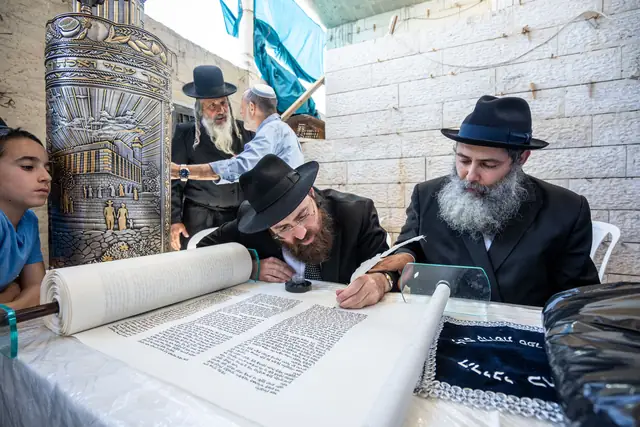
Great bar mitzvah photography comes down to three things: hiring a photographer who knows Jewish ceremonies and the rules of your synagogue, planning a pre-Shabbat or pre-ceremony photo session when photos are not allowed during the service, and giving them a clear shot list of the people and moments that matter. This guide explains how to choose and brief your photographer, the must-have shots, how to handle Shabbat and the Western Wall, and what to do with the photos afterwards.
Photos and video are usually the only part of the budget that lasts for decades. For the rest of the organisation, see our complete bar mitzvah planning guide.
Step 1: Understand the photography rules of your ceremony
Before contacting anyone, ask your rabbi what is allowed:
- On Shabbat and festivals, Orthodox and many traditional synagogues do not allow photography or filming. Guests are also asked not to use phones.
- On Monday and Thursday mornings, or on Rosh Chodesh, photography is often allowed, sometimes with restrictions: no flash, a fixed position, no movement near the bimah.
- At the Western Wall, photographers can usually follow weekday ceremonies, but the plaza is crowded and there are separate men's and women's sections. Mothers and sisters often watch from the women's side, sometimes from behind the partition, which affects the angles.
- In liberal communities, rules vary; some allow discreet photography even on Shabbat.
This determines whether you need a separate photo session.
Step 2: Plan a pre-ceremony photo session
When photography is not allowed during the service, a dedicated session solves the problem. Families usually organise it:
- A few days before, at the synagogue, with the boy wearing his tallit and, if the synagogue agrees, holding or reading from the Torah scroll;
- On a weekday morning when he puts on his tefillin;
- Outdoors, at a park, the beach or a place that matters to him, for more relaxed portraits.
Plan one to two hours, bring the suit, the tallit, the tefillin and any props linked to the theme, and invite the grandparents and siblings for family portraits. The boy will be more relaxed than on the day itself.
Step 3: Hire the right photographer
Where to look
Ask families who held a bar mitzvah recently, the synagogue office, your DJ or caterer, or browse a directory of event professionals such as the Mazaly vendor directory.
What to check
- Experience with bar mitzvahs and Jewish ceremonies: they will know when the aliyah happens, what "Baruch shepetarani" is, when candies fly.
- Full galleries, not just a selection of the best shots. Ask for two complete events.
- Low-light skills: synagogues and party halls are often dark.
- Style: documentary and natural, posed and classic, or a mix.
- A second photographer for large parties, so ceremonies, family portraits and the dance floor are covered.
- Videographer from the same team or a partner, for consistency.
Questions to ask
- How many hours of coverage are included?
- How many edited photos do you deliver, and when?
- Is there a separate session before the ceremony?
- What is your backup plan if you are sick?
- Do you bring lighting for the party?
- What are the payment and cancellation terms?
- Can we have a short preview within a few days?
Indicative budget: from about 800 to 3,000 euros for photography depending on hours, city and deliverables, and a similar range for video. Our bar mitzvah budget planning guide helps you place it in the overall budget.
Step 4: The bar mitzvah shot list
Write a list with the photographer and share it a few weeks before.
At the ceremony (when allowed)
- The boy putting on his tefillin, with his father or grandfather helping
- Wrapping the tallit
- The procession of the Torah scroll
- Being called up for the aliyah
- Reading with the yad (pointer)
- The father reciting "Baruch shepetarani"
- The rabbi's blessing
- The candy throwing, and kids collecting candies
- Hugs with parents and grandparents after the reading
- The mother and sisters watching from the women's section
- Singing and dancing after the service
Family portraits
- The boy alone, formal and relaxed
- With his parents
- With his siblings
- With each set of grandparents
- Three or four generations together
- With his tutor and his rabbi
- With his close friends
- The whole family group
Prepare a written list of the family groups with names, and give it to a cousin who knows everyone, so the photographer does not spend 30 minutes gathering people.
At the party
- Venue and decoration before guests arrive
- The candle-lighting display and the cake
- The grand entrance
- The hora and the chair lift
- Each candle-lighting dedication
- The speeches and guests' reactions
- The video montage moment
- Teenagers on the dance floor, the photo booth, activities
- Grandparents dancing
- Details: kippot, favours, table names, invitation
Step 5: Photos and the candle-lighting
The candle-lighting ceremony is one of the most photographed moments. To make it easier:
- Place the candle display where the photographer can stand in front.
- Keep lights on the candles bright enough.
- Call people up quickly, and ask them to pause for one second with the boy after lighting.
Step 6: Brief your guests
Guests' phones can ruin the official shots or, on Shabbat, offend. A few tips:
- Mention on the invitation or the event page that the Shabbat service is phone-free.
- Ask the rabbi or a relative to remind guests.
- At the party, consider a short "unplugged" moment for the aliyah photos or the hora, and let guests film freely afterwards.
- Create a shared album so guests can upload their own photos after the event.
Step 7: Video tips
- Short highlight film (3 to 5 minutes) for sharing, and a longer version with the speeches for the family.
- Interviews: a few words from grandparents, filmed before the party, are precious.
- Audio: speeches need a good microphone; coordinate with the DJ.
- Drone footage, if the venue is outdoor and allowed.
Step 8: After the event
- Ask for a preview of 20 to 30 photos within a week to share with family.
- Choose the album together with your son.
- Send prints to grandparents with a thank-you note.
- Back up the gallery in two places.
- Use a favourite photo for the thank-you cards.
Common mistakes
- Assuming photography is allowed without asking the rabbi.
- No family list, leading to missing grandparents in portraits.
- Too few hours booked, so the end of the party is not covered.
- Not sharing the running order, so the photographer is eating when the hora starts. Share the day's timeline with them; in Mazaly you can send the same timeline to every vendor.
- Choosing on price alone: the photos will outlive every other part of the budget.
Conclusion
The best bar mitzvah photos are planned: rules checked with the rabbi, a photo session when the service cannot be photographed, a photographer who knows the ceremony, and a precise shot list with family groups. Add a video with the speeches, and you will have memories for life. For ideas on the moments to capture, see our bar mitzvah party entertainment ideas and our article on bar mitzvah traditions explained.
Frequently asked questions
Can you take photos at a bar mitzvah on Shabbat?
In Orthodox and most traditional synagogues, photography and filming are not allowed on Shabbat and festivals, and guests are asked not to use their phones. Families usually organise a photo session a few days before or on a weekday morning, and photograph the party freely after Shabbat.
How much does a bar mitzvah photographer cost?
As an indicative range, bar mitzvah photography often costs from about 800 to 3,000 euros depending on the number of hours, the city and the deliverables, with video in a similar range. Packages including a pre-ceremony session and a second photographer cost more.
What photos should you take at a bar mitzvah?
The essentials are the tefillin and tallit, the aliyah and reading, the candy throwing, family portraits with grandparents, the grand entrance, the hora, the candle-lighting, the speeches and the teenagers on the dance floor. Prepare a written shot list and a list of family groups.
Can you take photos at a bar mitzvah at the Western Wall?
Yes, weekday ceremonies at the Western Wall, usually on Monday and Thursday mornings, can generally be photographed and filmed. The plaza is busy and men and women stand in separate sections, so brief your photographer on where family members will be.
When should you book a bar mitzvah photographer?
Book 8 to 12 months before, especially for popular dates such as Sunday and spring or early summer. Good photographers who specialise in Jewish events are often booked well in advance.