
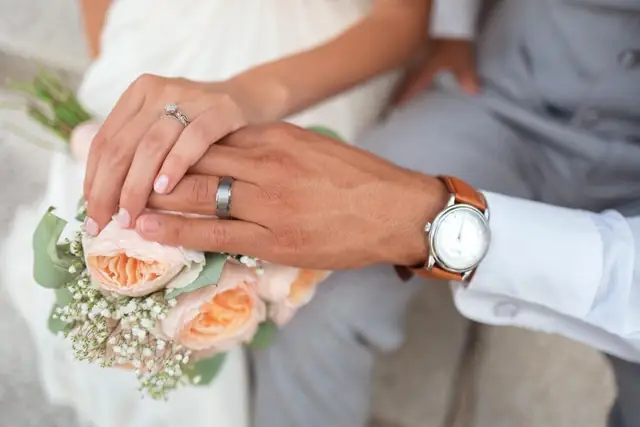
A small intimate wedding usually means up to about fifty guests, sometimes fewer than twenty, and it lets you spend more time with each person, choose more unusual venues and invest in details a large wedding cannot afford. The hardest part is not the planning but the guest list: deciding who is in and explaining it to the family. This guide gives you venue ideas, formats, guest list strategies, budget tips and ways to make a small wedding feel special.
Why couples choose a small wedding
- Time with guests: you can actually talk to everyone.
- Freedom of venue: restaurants, villas, rooftops, a family garden, a vineyard.
- Budget: fewer guests allows a higher quality per person, or a smaller overall cost.
- Less stress: fewer logistics, fewer decisions, more presence.
- Personal style: a long table dinner, a weekend with friends, a ceremony in a meaningful place.
In families where large weddings are the norm, as in many Israeli and Sephardic families, a small wedding can be a real cultural choice. It often goes with a second, larger celebration later, or a festive kiddush or party for the wider circle.
How to build a small guest list
Start from the center and work outwards:
- Immediate family: parents, siblings, grandparents.
- Closest friends: the people you see regularly and would call in a crisis.
- Key extended family: the aunts, uncles or cousins you are truly close to.
Then set rules and apply them to both sides equally:
- No plus-ones for guests in a casual relationship, or plus-ones for everyone.
- No colleagues, or only those you see outside work.
- Children or no children, clearly decided.
- Only people both of you know, or a fixed number each.
Rules make conversations with family much easier: "We only invited first cousins" is easier to hear than "We chose not to invite you". Our article on guest management for events has more tips.
Telling family and friends
- Explain your choice early and warmly, before invitations go out.
- Focus on what you want, not on who is excluded: "We want a dinner where we can talk to everyone."
- Offer an alternative for those not invited: a later party, a Shabbat lunch, photos and a video.
- Ask parents to support the decision with their own circle.
Small wedding venue ideas
| Venue | Ideal size | Atmosphere |
|---|---|---|
| Private room in a restaurant | 15 to 50 | Elegant dinner, great food |
| Villa or holiday home | 10 to 40 | Weekend with family and friends |
| Family garden | 20 to 60 | Personal, relaxed |
| Boutique hotel | 20 to 60 | Comfortable, accommodation on site |
| Winery or farm | 20 to 80 | Rustic, scenic |
| Rooftop or loft | 20 to 50 | Urban, modern |
| Synagogue with a kiddush hall | 20 to 80 | Traditional, community feel |
Many venues that cannot host a large wedding are perfect for small ones, and often more flexible on dates.
Format ideas for a small wedding
The long-table dinner
One long table for everyone, beautifully decorated, with a chef's menu and speeches between courses. Ideal for twenty to forty guests.
The wedding weekend
A villa or a small hotel, a welcome dinner on Friday, the ceremony on Saturday evening and a brunch on Sunday. Guests become a group, not just an audience.
The ceremony plus party
A small ceremony with close family, followed by a party with a larger group of friends. This keeps the emotional moment intimate.
Elopement with a celebration later
Some couples marry with only witnesses or parents, then host a bigger celebration months later. In a Jewish context, the minimum requirements for the ceremony include two valid witnesses and, for the full sheva brachot, a minyan; check with your rabbi.
Brunch or lunch wedding
A daytime wedding with a long brunch or lunch is relaxed, bright and often less expensive.
Making a small wedding feel special
- Personal speeches: with fewer guests, many people can say a few words. Our complete guide to event speeches helps structure them.
- A chef's menu or tasting dinner: the budget per guest allows more refined food. See our event menu planning guide.
- Handwritten notes: a personal letter at each place setting.
- Shared activities: a wine tasting, a cooking moment, a photo walk.
- Live music: a guitarist, a singer or a small ensemble can carry the evening.
- Meaningful favors: something chosen for each guest.
Budget for a small wedding
A smaller guest count reduces the biggest cost driver, but couples often raise the quality per guest. Common choices: a better photographer, a chef's menu, a more beautiful venue or nicer accommodation for guests. Decide what you want to invest in, and track it in your wedding budget.
Practical tips
- Invitations: even for a small wedding, a clear invitation with RSVP helps. An online invitation in Mazaly lets you collect answers and dietary needs, then send reminders on WhatsApp in a single tap.
- Seating: at small weddings, seating is more visible. A long table or two to four tables works best.
- Photography: choose a photographer comfortable with intimate, documentary-style coverage.
- Timing: a small wedding can be shorter. Three to five hours is often perfect.
Mistakes to avoid
- Not setting clear guest list rules.
- Letting the list grow "just a little" until it is no longer small.
- Forgetting to tell family early.
- Choosing a venue that feels empty for your number.
- Overcomplicating things: the charm of a small wedding is its simplicity.
Conclusion
A small intimate wedding is a choice to celebrate with the people who matter most and to make every detail count. Set clear guest list rules, communicate them kindly, choose a venue sized for your group and invest in the experience: food, words, music and time together. For the general steps, see our step-by-step wedding planning guide, and plan your guest list and invitations in Mazaly.
Frequently asked questions
How many guests is a small wedding?
A small or intimate wedding generally has up to about fifty guests, and many have fewer than thirty. Some couples call a wedding with only immediate family and a few friends a micro-wedding. The exact number depends on your family size and what feels intimate to you.
How do I tell family they are not invited to a small wedding?
Tell them early and explain the reason positively, focusing on the kind of celebration you want rather than on who is excluded. Clear rules, such as inviting only first cousins, make the conversation easier. Offering a later gathering or sharing photos helps people feel included.
Is a small wedding cheaper?
A small wedding usually costs less overall because the guest count drives catering and venue costs. However, many couples choose to spend more per guest on food, photography or the venue. The total depends on those choices.
What are good venues for a small wedding?
Good venues include private restaurant rooms, villas, boutique hotels, family gardens, wineries, lofts and synagogue halls. Many of these places cannot host large weddings but are ideal for small groups. They are also often more flexible on dates.
How many people are needed for a Jewish wedding ceremony?
A Jewish wedding requires at least two valid witnesses, and reciting the full seven blessings traditionally requires a minyan of ten men. Customs and requirements may vary between communities. Check the details with the rabbi who will officiate.