
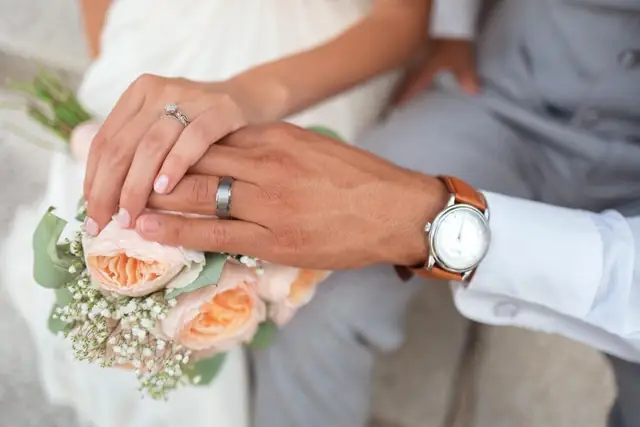
A great event speech is short, personal and built around one clear idea: three to five minutes, one or two real stories, a warm message to the people being celebrated and a toast to finish. Whether you are giving a wedding speech, a bar mitzvah speech, a toast at an engagement party or a few words at a 50th anniversary, the method is the same. This guide gives you the structure, the timing, examples you can adapt and the delivery tips that turn nerves into a moment people remember.
Why speeches matter so much at a celebration
Speeches are the moment an event stops being a party and becomes a story. They are often the part guests talk about afterwards and the part the couple, the parents or the bar mitzvah boy rewatch on video years later. A good speech says out loud what everyone in the room feels but nobody has put into words.
They also carry real risk. A speech that runs fifteen minutes, an inside joke only three people understand or an embarrassing anecdote about an ex can chill a room in seconds. The good news: almost every speech mistake is avoidable with a little preparation.
Who speaks, and when
The speaking order depends on the event and on your family's traditions. Agree on it in advance and put it in the day's timeline so the DJ or the master of ceremonies knows exactly who goes when.
| Event | Usual speakers | Typical moment |
|---|---|---|
| Wedding | Parents, best man, maid of honor, the couple | During or after the main course |
| Bar or bat mitzvah | The bar or bat mitzvah child (d'var Torah), parents, grandparents, siblings | At synagogue or during the party, often before dessert |
| Engagement party | Parents of the couple, a close friend, the couple | After guests have arrived and settled |
| Brit mila | The father, sometimes the grandfathers or the rabbi | At the festive meal after the ceremony |
| Wedding anniversary | Children, grandchildren, friends, the couple | Before or after dinner, before the cake |
| Retirement or corporate event | A manager, a colleague, the guest of honor | Early in the evening, before attention fades |
A few rules of thumb help. Keep the total speaking time under twenty to twenty-five minutes for the whole evening. Group speeches into one or two blocks rather than scattering them. And never schedule speeches when guests are still queuing at a buffet or when the dance floor has just reached its peak.
The universal structure of a good speech
Almost every successful speech follows the same five-part structure. Once you know it, writing becomes much easier.
1. The opening: who you are and why you are speaking
Thank the guests, introduce yourself in one sentence and explain your link to the people being celebrated. "For those who don't know me, I'm David, Noa's older brother, and I've been waiting twenty-eight years to embarrass her in public" works better than a long formal introduction.
2. The theme: one idea that ties everything together
The best speeches are built around a single idea: a quality of the person (generosity, stubbornness, humor), a phrase they always repeat, a journey or a turning point. Choose your theme before you collect stories, and keep only the stories that illustrate it.
3. The stories: one or two, not ten
Specific stories beat lists of adjectives. Instead of "she is kind and loyal", tell the story of the night she drove three hours to pick you up from an airport. One great story told well is worth more than five rushed ones.
4. The message: speak to the people you are celebrating
Turn to the couple, the child or the guest of honor and speak to them directly. This is where emotion lives: what you wish for them, what you have learned from them, what you are proud of.
5. The toast or the blessing
End on a clear signal that the speech is over: raise a glass, invite everyone to stand or offer a traditional blessing. "Please raise your glasses to Noa and Daniel: le'chaim!" gives the room a moment to react together.
How long should a speech be?
Shorter than you think. Here are indicative durations that work in practice:
- Toast: 1 to 2 minutes (about 150 to 300 words).
- Parent or best man or maid of honor speech: 3 to 5 minutes (about 450 to 750 words).
- Bar or bat mitzvah d'var Torah: 3 to 7 minutes, depending on the community and the rabbi's guidance.
- Couple's thank-you speech: 2 to 4 minutes.
A speaking pace of roughly 130 to 150 words per minute is natural for most people. Write your text, read it aloud with a timer and cut until it fits. If you are over five minutes, you are almost always too long.
Wedding speeches
The wedding is where most people give their first big speech. The roles and expectations differ by speaker.
Parents' speech
Parents usually welcome guests, thank those who traveled, welcome the new spouse into the family and share one or two memories of their child. In Jewish weddings, parents often weave in a blessing or a verse. Keep it warm and dignified; the funny anecdotes belong to the friends.
Best man and maid of honor speeches
These speeches can be funnier and more personal, but the rule is simple: tease gently, never humiliate. Avoid exes, money, heavy drinking stories and anything you would not say in front of the grandparents. You will find detailed structures and examples in our guide to best man and maid of honor speeches.
The couple's speech
The couple thanks their parents, their guests and the people who helped, and often says a few words to each other. If you are also writing personal vows for the ceremony, keep the two texts different: vows are promises to each other, the speech is gratitude to everyone else. Our article on ceremony readings and vows helps with the vows themselves.
Example: a short wedding toast
"Good evening everyone. I'm Sarah, Maya's best friend since first grade, when she shared her sandwich with me because I'd forgotten mine. That's Maya: she notices who is missing something, and she gives before you ask. Daniel, the first time I saw you two together, you were the one bringing her a sandwich. I knew then. Maya, Daniel, may your home always be full of people, of laughter, and of sandwiches. Please raise your glasses: to Maya and Daniel!"
Bar and bat mitzvah speeches
Bar mitzvah speeches are a specific genre, because the person being celebrated also speaks.
The bar or bat mitzvah d'var Torah
Traditionally, the child gives a d'var Torah, a short teaching based on the weekly Torah portion (parasha) or a theme connected to it. It usually includes a summary of the portion, a question or difficulty in the text, an answer drawn from commentators or personal reflection, a link to the child's own life and thanks to family and teachers. Customs vary between communities and synagogues, so check expectations with the rabbi or the teacher preparing the child. Our bar mitzvah speech writing tips walk through bar mitzvah speech examples step by step.
The parents' speech
Parents speak to their child about the person they are becoming: their qualities, a few memories, what this milestone means for the family and the values they hope to pass on. Many parents end with a blessing. If you are the father preparing your words, our bar mitzvah father speech guide has structures and sample lines.
Example: opening of a mitzvah speech by a parent
"Thirteen years ago, we held you for the first time and wondered who you would become. Tonight we have part of the answer: someone curious, who asks 'why' about everything, including this week's parasha. Ariel, your questions have taught us as much as our answers have taught you."
Engagement, brit mila and anniversary speeches
Engagement party
Engagement speeches are lighter and shorter than wedding speeches. Parents welcome the other family, tell how they heard the news and wish the couple well for the road to the wedding. One or two minutes per speaker is ideal. See our engagement party planning guide for where speeches fit into the evening.
Brit mila
At the meal after a brit mila, the father often explains the choice of the baby's name, especially when it honors a grandparent or a relative who has passed away. It is a short, emotional moment; a few sentences about the person whose name the baby carries, and the hopes the family has for the child, are enough.
Wedding anniversary
For a 25th or 50th anniversary, children and grandchildren often speak together. A good format is a speech in "chapters": how the couple met, the early years, the family they built, and what they mean to everyone today. Ideas for milestone celebrations are in our guides to the 25th silver wedding anniversary and the 50th golden wedding anniversary. If the couple renews their vows, the speeches can frame the ceremony, as described in our vow renewal planning guide.
Retirement and corporate events
In professional settings, keep it shorter and more measured: one or two achievements, one human anecdote, thanks and a toast. Our retirement party planning guide covers the rest of the evening.
How to write your speech, step by step
- Brainstorm without filtering. Write down every memory, quality, phrase and moment that comes to mind. Ask other relatives or friends for stories.
- Choose your theme. Look for the idea that links the best stories.
- Select one or two stories. Keep only the ones that illustrate the theme and that the whole room can understand.
- Write a first draft quickly. Do not polish yet; get the structure down.
- Read it aloud. Your ear catches what your eyes miss: sentences too long, words you would never say.
- Cut. Remove anything that does not serve the theme. Most first drafts are twice as long as they should be.
- Test it on one trusted person. Ideally someone who knows the audience and will tell you honestly if a joke might hurt.
- Prepare your support. Cue cards or a printed page in large font are fine. Reading from your phone works too, but turn on airplane mode and maximum brightness.
Delivery: how to give a speech without panicking
Most people are nervous before speaking, and that is normal. These habits help:
- Rehearse at least five times out loud, including once standing, ideally in front of someone.
- Know your first and last sentences by heart. The beginning carries you in and the ending carries you out.
- Breathe and slow down. Nerves make everyone speak faster. Pause after a joke and before the toast.
- Hold the microphone close, about a hand's width from your mouth, and do not wave it around.
- Look at the people you are celebrating during the emotional part, and at the room for the rest.
- Drink after the speech, not before. A single drink is fine; more is a classic recipe for a speech that goes off the rails.
- If you get emotional, pause. Guests love it. Take a breath, smile and continue.
Speeches in multilingual and multicultural families
Many families celebrating in Israel or abroad mix languages: Hebrew, French, English, sometimes Arabic, Russian or Spanish. A few tips:
- Choose one main language per speech and add a sentence or two in the others, rather than translating everything.
- Print a short translated summary on the tables, or ask a bilingual relative to give a short summary after the speech.
- Avoid untranslatable wordplay unless the whole room shares the language.
- Respect religious sensitivities. In mixed-observance families, check that blessings and references feel inclusive.
Humor: how far can you go?
Humor makes a speech memorable, but it must be generous. A simple test: would the person you are talking about laugh hardest? If yes, keep it. If they might be embarrassed in front of their grandparents, their new in-laws or their colleagues, cut it.
Topics to avoid in almost every case:
- Exes and past relationships.
- Money, weight, appearance.
- Heavy drinking or illegal stories.
- Family conflicts and divorces.
- Jokes that only a small group understands.
Self-deprecating humor is usually the safest kind: laughing at yourself relaxes the room and puts the spotlight back on the people being celebrated.
Organizing speeches as a host
If you are the one hosting the event, a little coordination prevents most problems:
- Make a list of speakers at least a month in advance and tell each person how long they have.
- Set a speaking order and share it with the DJ or master of ceremonies.
- Plan the logistics: a working microphone, a quiet room (pause the music and the bar service), and a moment when guests are seated.
- Keep a printed copy of each speech with someone you trust, in case a speaker forgets theirs.
- Brief the photographer and videographer so they are in place.
In Mazaly, you can add each speech as a step in the day-of timeline, with the speaker's name and approximate duration, and share that timeline with the family members and the people coordinating the evening. Everyone sees the same schedule, and nobody discovers at the last minute that they were supposed to speak. Our guide to the wedding day timeline explains how to place speeches in the evening.
The most common speech mistakes
- Too long. Beyond five minutes, the room's attention drops sharply.
- Starting with "I'm not good at speeches". It lowers expectations and adds nothing.
- A list of thank-yous with no story. Thank people, but give the room something to feel.
- Reading the whole text with your head down. Look up at least at the end of each paragraph.
- Improvising entirely. Even confident speakers lose the thread without notes.
- Forgetting the partner or the other family. At a wedding, speak about both spouses.
- Talking about yourself more than the person being celebrated.
A speech checklist for the last week
| When | Task |
|---|---|
| 1 month before | Collect stories, choose the theme, write the first draft |
| 2 weeks before | Cut, test on someone, time it |
| 1 week before | Rehearse aloud daily, prepare cue cards |
| The day before | Final read, print two copies, prepare a glass for the toast |
| On the day | Check the microphone, eat something, breathe |
Conclusion
You do not need to be a natural speaker to give a great event speech. You need one clear idea, one or two true stories, a warm message to the people you are celebrating and a strong final toast, all in under five minutes and rehearsed out loud. Whether it is a wedding speech, a mitzvah speech or a toast at a golden anniversary, the same method works. And if you are hosting, put every speech into the shared day-of timeline in Mazaly, free on iPhone and on the web, so the evening flows exactly as planned.
Frequently asked questions
How long should a wedding speech be?
A wedding speech should usually last three to five minutes, which is about 450 to 750 words spoken at a natural pace. A simple toast can be as short as one or two minutes. Beyond five minutes, most audiences start to lose attention, especially if several people speak.
How do I start a speech at a wedding or a bar mitzvah?
Start by thanking the guests, introducing yourself in one sentence and explaining your link to the people being celebrated. A short, light opening line about how you know them works better than a formal introduction. Then move quickly into your main idea or first story.
What does a bar mitzvah speech usually include?
A bar or bat mitzvah speech, or d'var Torah, usually summarizes the weekly Torah portion, raises a question about the text, offers an answer from commentators or personal reflection and connects it to the child's life. It ends with thanks to parents, family and teachers. Expectations differ between synagogues, so it is best to check with the rabbi or teacher.
Who gives speeches at a wedding, and in what order?
Commonly, the parents speak first, followed by the best man and the maid of honor, and the couple closes with a thank-you speech. Many families adapt this order, for example with both sets of parents speaking together. The key is to agree on the order in advance and share it with the DJ or master of ceremonies.
Is it okay to read a speech from notes or a phone?
Yes, reading from notes is completely acceptable and usually leads to a better speech than improvising. Use large-font cue cards or a printed page, and look up regularly at the room. If you use your phone, switch on airplane mode and turn up the brightness.
How can I stop being nervous before giving a speech?
Rehearse out loud at least five times, learn your first and last sentences by heart and slow down when you speak. Eat something beforehand and avoid drinking too much before your turn. A pause when you feel emotional is perfectly natural and guests usually appreciate it.