
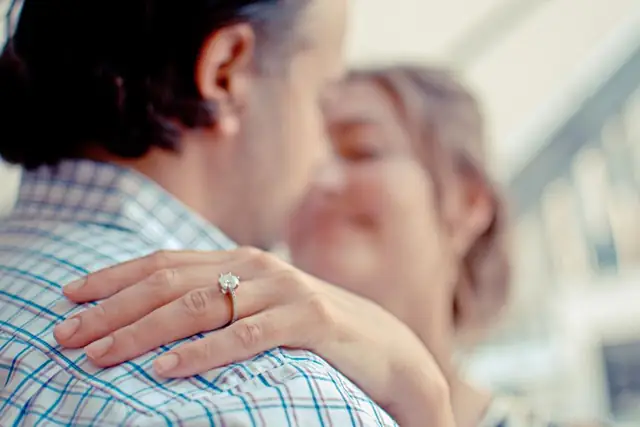
The best engagement photo shoot ideas start from your story: a place that means something, outfits that feel like you, and one or two activities that make you forget the camera. Add good light, a photographer you trust and a little preparation, and you will get natural photos you can use for save the dates, invitations and your wedding website. Here is how to plan every part of the session.
Why do an engagement shoot at all?
An engagement session has three practical benefits beyond beautiful pictures:
- Practice with your photographer. You learn how they work and they learn your best angles before the wedding day.
- Get comfortable on camera. Most couples are stiff for the first 15 minutes; it is better to get through that now.
- Photos for everything else. Save the dates, the invitation, your wedding website, a guest book, a welcome sign and the engagement party slideshow.
Many photographers include an engagement session in their wedding packages, so ask before you book separately. Our guide to hiring a wedding photographer explains what to look for.
Choosing a location that means something
Places from your story
The café where you met, the street of your first apartment, the park where you walked your dog, the beach where you got engaged. A personal location gives the photos meaning and helps you relax.
Urban locations
Old town streets, colorful doors, rooftops, markets, bridges and train stations give texture and energy. In Israel, the alleys of Jaffa or Neve Tzedek, the Jerusalem stone of the Old City or Nachlaot, and the markets at quiet hours are popular. In France, Montmartre, the quays of the Seine, Marseille's Vieux-Port or the old streets of Lyon work beautifully.
Nature
Beaches, forests, vineyards, fields, desert landscapes and lakes. The Negev, the Galilee and the Dead Sea offer dramatic backdrops; the Provence lavender fields and the Atlantic coast are classics in France.
At home
An "at home" session, cooking together, reading on the sofa, playing with your pet, is intimate and very natural. It works especially well for shy couples.
Practical checks: permits (some parks and historic sites require them), crowds, parking, toilets, a place to change outfits, and a backup for bad weather.
Timing: light and season
| Time of day | Result |
|---|---|
| Golden hour (1 hour before sunset) | Warm, soft, flattering light; the most popular choice |
| Sunrise | Soft light and empty locations, but an early start |
| Midday | Harsh shadows outside; better for shade, indoors or cities with tall buildings |
| Blue hour (just after sunset) | Moody, city lights, good for evening outfits |
Season matters too. Spring and autumn are ideal in most of Europe and in Israel. Summer midday heat is uncomfortable and unflattering; shoot early or late. Winter offers soft light all day and dramatic skies.
Plan the session four to eight months before the wedding if you want the photos for save the dates.
What to wear
Coordinate, do not match
Choose a palette of two or three colors and dress within it, rather than wearing identical outfits. Neutrals, earth tones, soft pastels and deep jewel tones photograph well.
Avoid
- Large logos and busy small patterns, which distract or create visual noise.
- Neon colors, which reflect on skin.
- Brand-new shoes you have never walked in.
Plan two looks
Many couples bring one casual and one dressier outfit. Change between locations, or keep the second look for the golden hour.
Details
Get a manicure if your ring will feature, bring lint rollers, blotting papers, hair pins, a comb and water. For the bride, a hair and make-up trial can be scheduled the same day, which doubles as a rehearsal for the wedding.
Activities and props that make photos natural
Doing something together is the easiest way to look natural on camera:
- Cooking or baking together at home.
- A picnic with a blanket, fruit and a bottle of wine.
- Walking your dog.
- A coffee at your café, a bike ride, a boat trip.
- Dancing in the street or on the beach.
- Visiting a market and sharing food.
Props can add personality, but keep them few: a vintage car, balloons, a "save the date" letter board, a sign with your wedding date, a sparkler moment at night (check local rules), an umbrella in the rain.
Engagement photo poses that do not look posed
Good photographers direct movement rather than freezing you into positions. Prompts that work:
- The walk: hold hands and walk toward the camera, talking to each other.
- The whisper: one partner whispers something funny in the other's ear.
- The forehead touch: eyes closed, noses close, a quiet moment.
- The spin: a twirl, especially with a flowing dress.
- The look back: walk away, then turn to the camera together.
- The ring shot: hands together on a meaningful surface, such as a book, a map or a coffee table.
- The seated cuddle: on steps, a bench or the sand, leaning into each other.
Ask your photographer for prompts rather than poses, and remember that laughter photographs better than perfect smiles.
Budget and booking
Indicative prices in Europe in 2026 range from 200 to 600 € for a one to two hour engagement session, depending on the city and the photographer's experience. Ask what is included: number of edited photos, delivery time, travel, a second location, print rights. A deposit is often requested at booking.
Book four to eight weeks ahead, and more for spring and autumn weekends. Share a short mood board, two or three reference images, not fifty, and the list of shots you need, such as a horizontal photo for the save the date with space for text.
How to use your engagement photos
- Save the dates and invitations: choose a photo with clean negative space for text. You can create a matching online invitation with its own little website on Mazaly invitations.
- Engagement party: a printed photo wall or a slideshow. See our engagement party decoration ideas.
- Announcements: a carousel to announce the news; our creative engagement announcement ideas have caption examples.
- Wedding day: a guest book, a welcome sign or framed photos on the tables.
Common mistakes to avoid
- Booking at midday in summer. Squinting and harsh shadows.
- Too many outfit changes. Two looks are plenty for a short session.
- Not eating beforehand. Hungry couples look tired.
- Over-planning poses. Let the photographer guide you.
- Arriving late to golden hour. The best light lasts minutes, not hours.
- Forgetting the weather. Have an indoor or covered backup and a flexible date.
A quick preparation checklist
- Choose a photographer and confirm what is included.
- Pick one or two locations and check permits.
- Choose a date in the right season and time slot.
- Agree on a color palette and two outfits.
- Book hair, make-up and a manicure if wanted.
- Prepare props and an activity.
- Pack water, snacks, a comb, blotting papers and comfortable shoes.
- Confirm the plan and a weather backup the day before.
Conclusion
Great engagement photos come from preparation and from forgetting about the camera. Pick a place that tells your story, shoot in soft light, wear coordinated outfits you feel good in, and give yourselves something to do together. The session is also your rehearsal for the wedding, so enjoy it. For the full picture of what comes next, read our engagement party planning guide.
Frequently asked questions
When should you take engagement photos?
Most couples take engagement photos four to eight months before the wedding, so the images are ready for save the dates and invitations. Some book the session shortly after the proposal, others closer to the wedding as a rehearsal. Spring and autumn usually offer the best light and comfortable temperatures.
What should couples wear for an engagement photo shoot?
Choose coordinated, not matching, outfits in a palette of two or three colors, such as neutrals, earth tones or soft pastels. Avoid large logos, neon colors and very busy patterns. Many couples bring one casual and one dressier look, and comfortable shoes for walking between spots.
How long does an engagement photo session last?
A typical engagement session lasts one to two hours, which allows for one or two locations and an outfit change. Shorter sessions can feel rushed, while longer ones tire most couples. Plan the session to end during golden hour for the best light.
How much does an engagement photo shoot cost?
As an indicative range in Europe, an engagement session costs about 200 to 600 euros, depending on the city, the photographer and the number of edited images. Many wedding photographers include an engagement session in their wedding packages, so ask before booking separately.
How do you look natural in engagement photos?
Do something together, such as walking, cooking, dancing or sharing a picnic, and let the photographer give you prompts rather than fixed poses. Talk to each other, laugh and ignore the camera. The first 15 minutes are always the stiffest, so plan enough time to relax.